Why Standards Are the Foundation of PCB Quality
Every electronic product you rely on — from the medical device monitoring a patient's vitals to the avionics guiding a commercial aircraft — depends on printed circuit boards assembled to a predictable, verifiable level of quality. That predictability comes from standards. Without them, each contract manufacturer would define "acceptable" on its own terms, and comparing quotes or auditing suppliers would become guesswork.
The dominant body that publishes PCB assembly and workmanship standards is IPC — originally the Institute of Printed Circuits, now operating simply as IPC. Two documents sit at the center of virtually every professional PCB assembly program: J-STD-001, which specifies requirements for soldering processes and materials, and IPC-A-610, which defines the acceptability criteria for the finished assembly. Understanding what these documents say — and what class your product requires — is one of the most important decisions you will make before placing a manufacturing order.
J-STD-001: Requirements for Soldered Electrical and Electronic Assemblies
J-STD-001 is a process standard. It tells manufacturers how to solder: what fluxes are acceptable, what temperatures are allowable, how to clean (or whether cleaning is required), and how to handle electrostatic-sensitive devices. Revisions are released periodically; the current release at the time of writing is Revision H.
Key areas covered by J-STD-001 include:
- Materials qualification: solder alloys, flux types (no-clean, water-soluble, rosin), and paste specifications.
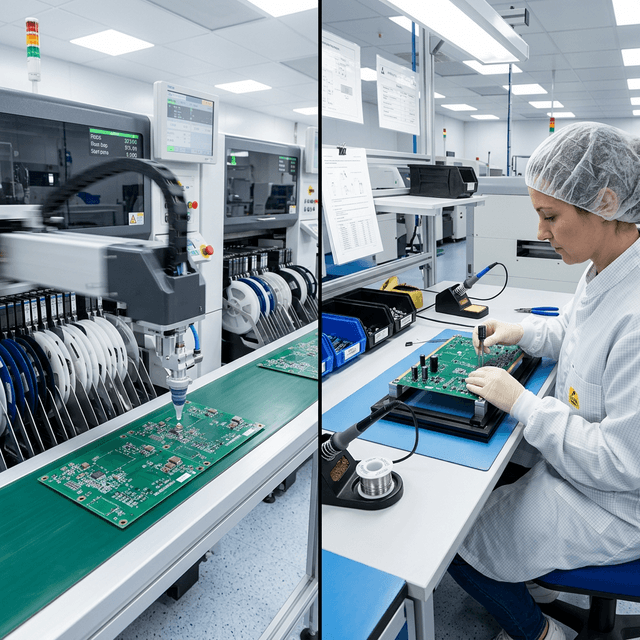
- Process controls: reflow oven profiling, wave solder parameters, hand-soldering iron temperature and tip maintenance.
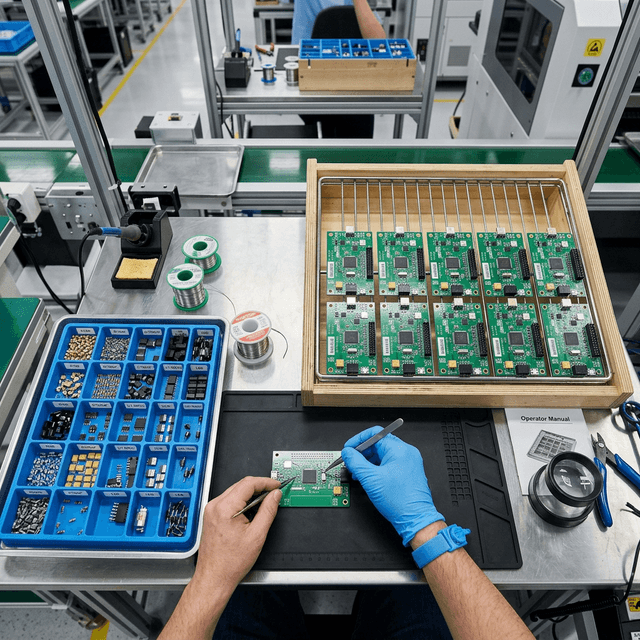
- ESD handling: requirements for static-safe workstations, wrist straps, and packaging.
- Cleanliness: when and how to clean residues, and how to verify cleanliness through ionic contamination testing.
- Operator certification: the standard defines a training and certification framework (IPC-J-STD-001 Certified IPC Specialist, or CIS) to ensure technicians are qualified to perform the work.
When a contract manufacturer tells you they are "J-STD-001 certified," that means their processes, materials, and personnel have been evaluated against these requirements — either through internal training programs or third-party certification bodies.
IPC-A-610: Acceptability of Electronic Assemblies
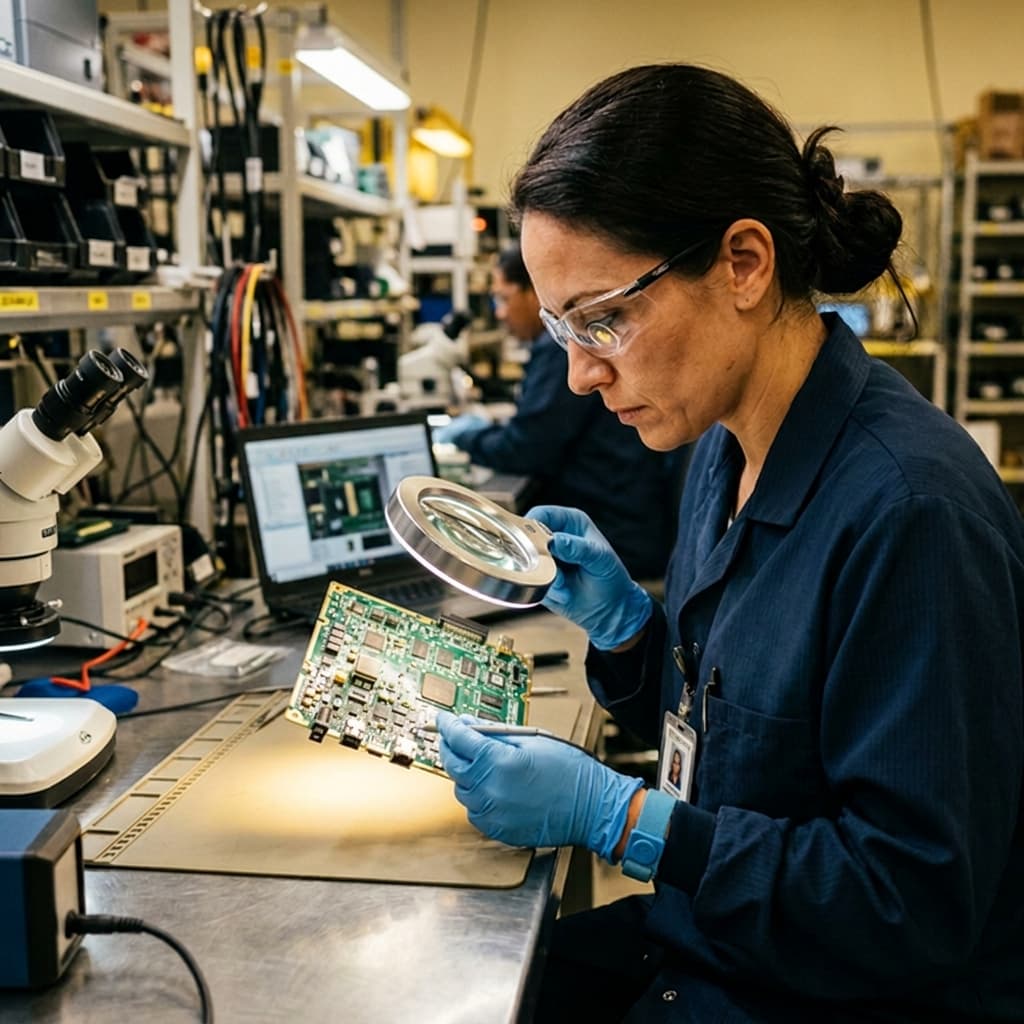
Where J-STD-001 governs the process, IPC-A-610 governs the outcome. It is the most widely used electronics assembly standard in the world, and its visual workmanship criteria are what inspectors reference when they examine a finished board under magnification.
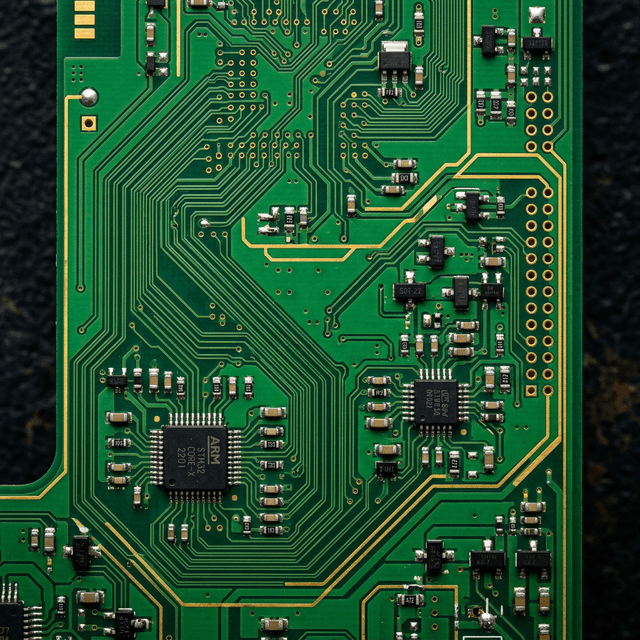
IPC-A-610 defines acceptance criteria for solder joints on every common component type — surface mount chips, BGAs, through-hole leads, fine-pitch QFPs — as well as for laminate condition, component placement, marking, and cleanliness. Critically, it distinguishes between three conditions:
- Target: The ideal, preferred condition. Not always achievable in production.
- Acceptable: Not perfect, but reliable within the intended product class.
- Defect: A condition that must be reworked or dispositioned before the board ships.
Class 1, 2, and 3: What They Mean and When They Apply
The most important concept in IPC-A-610 is the three-tier classification system. Your product's class determines how tight the acceptance criteria must be — and therefore how much labor and inspection time goes into the assembly.
Class 1 — General Electronic Products
Class 1 applies to products where the primary requirement is function, not longevity or appearance. Consumer toys, simple household appliances, and disposable electronics often fall here. The acceptance criteria are the most permissive of the three classes. Solder joints that would be defects in Class 2 may be acceptable in Class 1.
Class 2 — Dedicated Service Electronic Products
Class 2 is the default for the vast majority of commercial and industrial electronics: computers, telecommunications equipment, industrial controls, and most IoT products. Extended reliability is desired but the environment is not harsh, and brief interruptions of service are tolerable. Most contract manufacturers quote to Class 2 unless told otherwise.
Class 3 — High-Performance/Harsh Environment Electronic Products
Class 3 is reserved for products where failure is not an option — military electronics, aerospace hardware, implantable medical devices, automotive safety systems. Acceptance criteria are the most stringent: solder fillet minimums are tighter, acceptable surface conditions are narrower, and documentation requirements are more rigorous. Class 3 manufacturing typically costs more due to increased inspection time, tighter process windows, and stricter operator certification requirements.
How to Verify Your Contract Manufacturer Follows These Standards
Claiming compliance is easy; verifying it requires a structured approach. Here is what to look for and ask when evaluating a CM's adherence to IPC standards.
1. Ask for Certifications Directly
A reputable CM will hold current IPC Certified Interconnect Designer (CID), CIS, or Certified IPC Trainer (CIT) credentials among their staff. Ask for copies of current certifications, which are time-limited and require periodic renewal. Lapsed certificates indicate a program that has drifted.
2. Review the Quality Management System
ISO 9001 certification does not guarantee IPC compliance, but it does indicate the manufacturer has a documented QMS. Ask for the quality manual's section on workmanship standards and verify that IPC-A-610 and J-STD-001 are explicitly referenced — not just generically mentioned.
3. Audit the Floor
Nothing replaces a floor audit. Watch how operators handle boards, observe whether ESD protocols are actually followed (not just posted on the wall), and examine the inspection equipment. Automated Optical Inspection (AOI) and X-ray systems for BGA inspection are baseline expectations for Class 2 and Class 3 work.
4. Request First Article Inspection Reports
A First Article Inspection (FAI) report documents that the initial assemblies were inspected against your drawings and the applicable IPC class. If the CM cannot produce a structured FAI report, that is a warning sign.
5. Specify the Class on Your Purchase Order
Do not leave the class ambiguous. If your PO and drawings do not specify Class 2 or Class 3, the manufacturer may default to Class 1. Put the applicable standard and class in your drawings, your assembly notes, and your purchasing terms.
The Business Case for Standards Compliance
Standards compliance is not bureaucratic overhead — it is risk management. A board that passes Class 2 IPC-A-610 inspection has been evaluated by trained eyes against documented, industry-consensus criteria. If a field failure occurs, you have a paper trail demonstrating the assembly met its specification. That matters for warranty claims, regulatory filings, and liability exposure.
More practically, CMs that invest in IPC training and certification tend to have lower defect rates, better first-pass yields, and more consistent output. The investment in standards infrastructure usually correlates with a more professional operation overall — and that shows up in your product's reliability in the field.
EMS Technologies
Electronic Manufacturing Insights